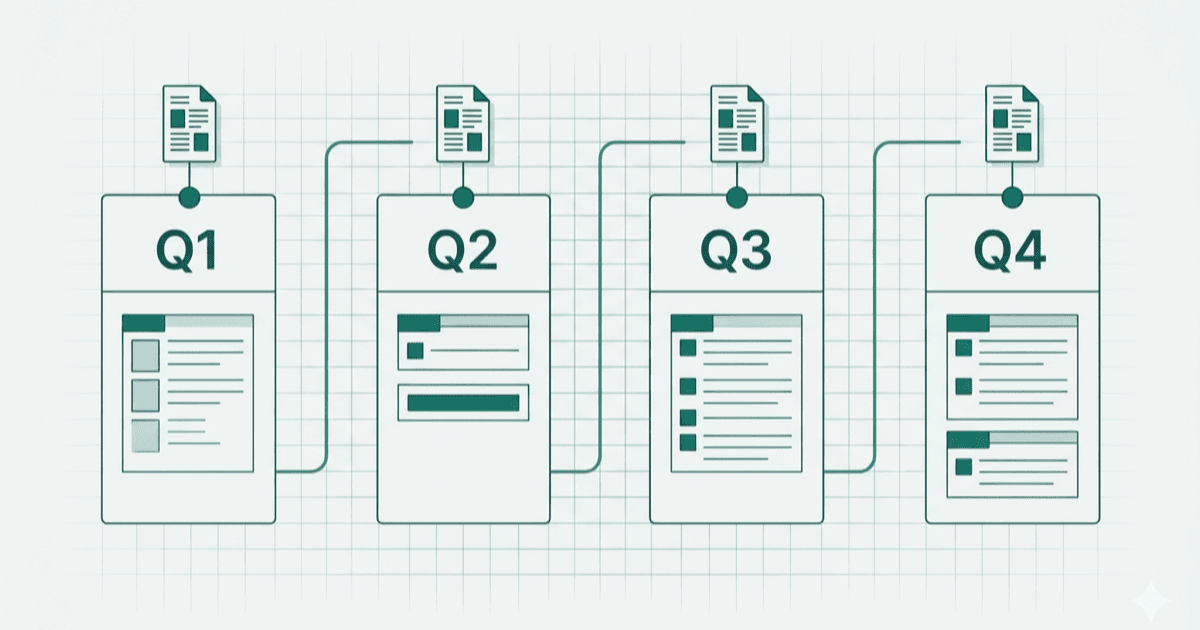
Fig 01 · The Complete QRMP Scheme Guide for Chartered Accountants
The Quarterly Return Monthly Payment (QRMP) scheme was introduced by CBIC via Notification No. 84/2020-Central Tax to reduce the compliance burden for small and medium GST registrants. For Chartered Accountants managing GST portfolios, the scheme changes how you structure monthly work, what deadlines you track, and how you handle invoice disclosures for QRMP clients versus regular taxpayers.
This guide walks through every aspect of the scheme so you can advise clients accurately and manage deadlines without surprises.
Who Qualifies for QRMP
The scheme is available to registered taxpayers whose aggregate annual turnover does not exceed Rs. 5 crore in the preceding financial year. Turnover is computed on a PAN basis across all GSTINs of a single entity.
A few important nuances:
- Taxpayers who cross Rs. 5 crore turnover during the current financial year become ineligible from the immediately following quarter. They must switch to monthly GSTR-1 and GSTR-3B.
- New registrations in the current year are eligible if turnover in the immediately preceding financial year was within the Rs. 5 crore limit. If a taxpayer has no prior year data (new registrant), they are eligible by default.
- Composition scheme taxpayers are not eligible, since they file GSTR-4 annually.
- Input Service Distributors, Non-Resident Taxable Persons, and taxpayers under TDS/TCS provisions are excluded from QRMP.
Eligibility is assessed separately per GSTIN. If a business has multiple GSTINs under one PAN, each GSTIN is evaluated independently, though the turnover threshold is applied at the PAN level.
How to Opt In (and Out)
Opting into QRMP is done on the GST portal under Services > Returns > Opt-in for Quarterly Return. The opt-in window opens on the first day of the second month of the preceding quarter and closes on the last day of the first month of the current quarter.
In practical terms, the windows are:
| Opt-in for Quarter | Window Opens | Window Closes |
|---|---|---|
| April to June | 1 February | 30 April |
| July to September | 1 May | 31 July |
| October to December | 1 August | 31 October |
| January to March | 1 November | 31 January |
Once a taxpayer opts in, the selection remains in effect for all future quarters until they opt out. Opting out follows the same window schedule. If a taxpayer misses the opt-out window, they remain in QRMP for that quarter.
CAs should calendar these windows for every QRMP client. A client who crosses Rs. 5 crore mid-year and fails to exit QRMP on time will face a mismatch between their filing obligation and their actual filings.
For a full checklist of GST filing deadlines relevant to both QRMP and monthly filers, refer to GST Filing Deadlines for FY 2026-27.
Monthly Payment via PMT-06
Even though QRMP taxpayers file GSTR-1 and GSTR-3B quarterly, they must make monthly tax payments for the first two months of each quarter. The payment challan is PMT-06.
The due date for PMT-06 is the 25th of the month following the end of the first and second months of the quarter. So:
- For April: PMT-06 by 25 May
- For May: PMT-06 by 25 June
- For July: PMT-06 by 25 August
- For August: PMT-06 by 25 September
- For October: PMT-06 by 25 November
- For November: PMT-06 by 25 December
- For January: PMT-06 by 25 February
- For February: PMT-06 by 25 March
No PMT-06 is required for the third month of each quarter because the GSTR-3B filed at the end of the quarter covers that month's liability.
QRMP taxpayers have two methods for computing the monthly payment amount:
Fixed Sum Method (FSM): The system auto-populates 35% of the tax paid in the last quarter via GSTR-3B (or 100% of the tax paid in the immediately preceding month if the last quarter was a monthly return period). This is convenient but can cause underpayment if business has grown.
Self-Assessment Method (SAM): The taxpayer computes actual liability for the month based on outward and inward supplies and pays the exact amount. This requires more effort but avoids both underpayment interest and excess cash blocking.
Interest under Section 50 of the CGST Act applies at 18% per annum if the monthly payment falls short of actual liability at the time of quarterly GSTR-3B filing.
Invoice Furnishing Facility (IFF)
The Invoice Furnishing Facility allows QRMP taxpayers to upload B2B invoice details for the first two months of the quarter, so that the recipients of those supplies can claim ITC on a timely basis without waiting for the quarterly GSTR-1.
Key IFF parameters:
- Available for the first two months of the quarter only. The third month's invoices are reported in the quarterly GSTR-1.
- IFF is optional, not mandatory. A QRMP taxpayer who does not use IFF will have all their B2B invoices reflected in GSTR-2B only after the quarterly GSTR-1 is filed.
- The window to file IFF closes on the 13th of the month following the relevant month. For example, IFF for April must be filed by 13 May.
- Only B2B invoices, credit notes, and debit notes can be reported via IFF. B2C invoices, exports, and nil-rated supplies cannot be reported through IFF; they are reported in the quarterly GSTR-1.
- There is a monetary cap on invoices reported via IFF: the cumulative invoice value cannot exceed Rs. 50 lakh per IFF filing. Invoices beyond this cap must wait for the quarterly GSTR-1.
For CAs managing clients who supply to large businesses with monthly ITC requirements, IFF is important to maintain the supply relationship. Buyers whose suppliers do not file IFF will see ITC appear in GSTR-2B only once a quarter, which can affect their working capital.
For more detail on how invoice mismatches arise when suppliers are on QRMP and buyers are on monthly, see GST Invoice Mismatches: 8 Things to Check Before Filing GSTR-1.
Common Mistakes CAs Catch
Managing QRMP clients requires vigilance about a specific set of errors:
Treating quarterly GSTR-1 due date as the IFF due date. IFF is due on the 13th of the month following the first and second months of the quarter. GSTR-1 (quarterly) is due on the 13th of the month following the end of the quarter. These are different deadlines and affect different sets of invoices.
Paying PMT-06 late or skipping it. Some clients assume that because GSTR-3B is quarterly, no payment is needed monthly. This is incorrect. Missing PMT-06 attracts interest from the due date.
Reporting all invoices in the quarterly GSTR-1 instead of using IFF. While legally permissible, this defers ITC for the client's buyers. If buyers are on monthly filing, they will raise reconciliation queries when GSTR-2B shows a gap.
Mixing up the opt-in window with the quarterly filing deadline. The opt-in window is not tied to when the quarterly return is due. Confusing these leads to missed opt-in or opt-out.
Using FSM without accounting for business growth. If a client's Q2 liability is significantly higher than Q1, the 35% FSM payment may fall short. Advise clients to self-assess when revenue is growing.
Not checking ITC reversal obligations separately. Opting into QRMP does not change ITC reversal requirements under Rules 42 and 43. These must still be computed and applied on a monthly basis even though the return is quarterly. See ITC Reversals Under Rules 42 and 43 for a detailed treatment.
You can track all QRMP-related compliance obligations for your clients using the FiledRight rules engine, which flags upcoming PMT-06 and IFF deadlines automatically.
Key Deadlines at a Glance
| Compliance | Frequency | Due Date |
|---|---|---|
| PMT-06 (monthly payment) | Monthly (M1 and M2 of quarter) | 25th of following month |
| IFF (B2B invoices M1, M2) | Monthly (optional) | 13th of following month |
| GSTR-1 (quarterly) | Quarterly | 13th of month after quarter end |
| GSTR-3B (quarterly) | Quarterly | 22nd or 24th of month after quarter end* |
*22nd for states in Category 1 (Maharashtra, Karnataka, etc.), 24th for Category 2 states. CBIC periodically issues notifications extending these dates; always verify against the latest circular on cbic.gov.in.
One final note: the QRMP scheme reduces the number of GSTR-3B filings from 12 to 4 per year, but it does not reduce the total tax due. Clients sometimes interpret "quarterly" as meaning they owe less tax, or that tax can be deferred. That misunderstanding is worth correcting at the outset of every engagement.