Fig 01 · Input Tax Credit Reversals Under Rule 42 and 43: A Practical Walkthrough
Most GST-registered businesses claim Input Tax Credit on every purchase without questioning whether any portion should be reversed. That works fine when all supplies are taxable. The moment a business makes even one exempt or non-business supply, a reversal obligation under Rules 42 and 43 of the CGST Rules, 2017 kicks in. For CAs managing clients across multiple sectors, such as hospitals, schools, financial services businesses, exporters alongside exempt domestic sales, or traders with occasional personal-use assets, understanding the reversal mechanics precisely is not optional.
This walkthrough covers both rules, the formula components, a worked example with real numbers, the errors that appear most often, and how to report reversals correctly in GSTR-3B.
Why ITC Reversals Exist
Section 17 of the CGST Act, 2017 lays down the foundational principle: ITC is available only to the extent that inputs, input services, and capital goods are used for taxable outward supplies. Where the same purchase is used partly for exempt supplies (or for non-business purposes), the ITC on that common purchase must be proportionately reversed.
Without this mechanism, a hospital that uses electricity for both its OPD (which is exempt from GST) and its pharmacy (taxable) would claim 100% ITC on its electricity bill. That would allow the exempt activity to subsidise the credit, distorting the GST chain. The reversal rules prevent that distortion.
There are two separate rules because the reversal methodology differs depending on the nature of the input:
- Rule 42 covers inputs (raw materials, consumables) and input services (fees, outsourced services).
- Rule 43 covers capital goods (plant, machinery, equipment with a useful life exceeding 12 months).
Rule 42: Inputs and Input Services
Rule 42 applies when a taxpayer uses inputs or input services partly for taxable supplies (including zero-rated exports) and partly for exempt supplies or non-business purposes.
Step 1: Segregate credits directly.
Not all ITC goes into the Rule 42 pool. First identify:
- T1: ITC on purchases used exclusively for exempt supplies. This credit is not claimable at all.
- T2: ITC on purchases used exclusively for non-business purposes. Also not claimable.
- T3: ITC blocked under Section 17(5) (motor vehicles in restricted categories, food, club memberships, etc.). Blocked by statute.
- T4: ITC on purchases used exclusively for taxable supplies. This is fully claimable without any Rule 42 reversal.
What remains after removing T1, T2, T3, and T4 from total ITC (T) is the common credit pool, denoted C2:
C2 = T minus (T1 + T2 + T3 + T4)
Step 2: Calculate the reversal from C2.
From C2, the portion attributable to exempt supplies is:
D1 = (E / F) x C2
Where:
- E = aggregate value of exempt supplies during the tax period
- F = total turnover (taxable + exempt) during the tax period
D1 is the provisional reversal amount for the tax period.
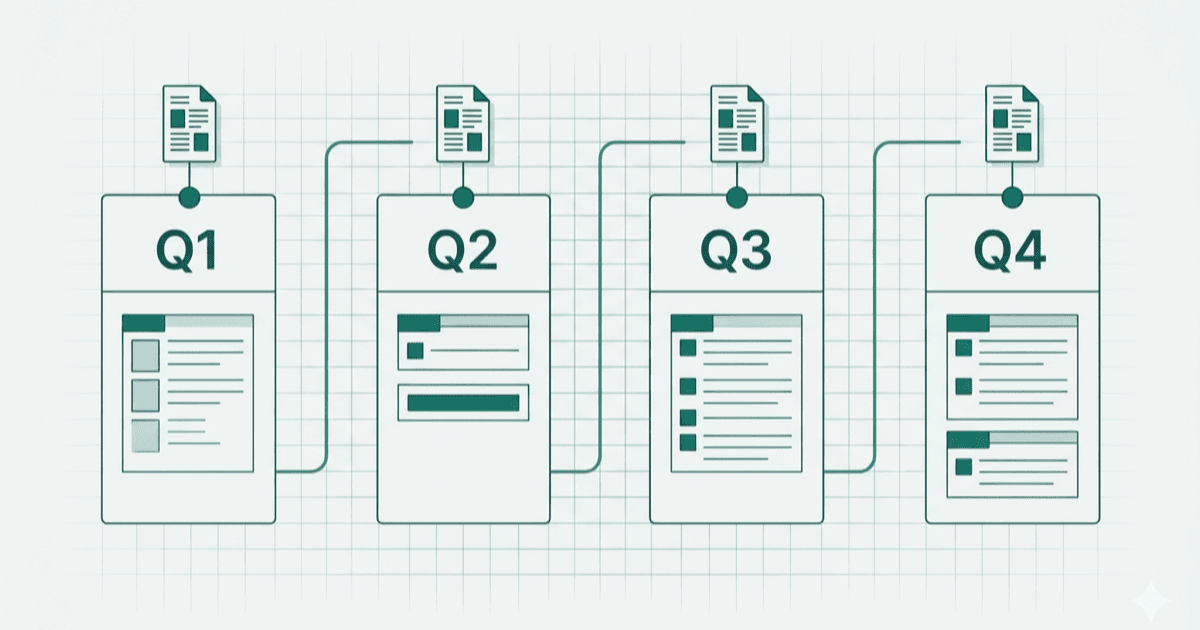
Step 3: Annual true-up.
The E/F ratio is calculated monthly based on that month's turnover. At year-end, a final calculation must be done using the actual annual turnover figures. If the sum of monthly D1 reversals falls short of the annual D1, the shortfall is added to output tax liability with interest at 18% per annum from the first day of April following the financial year until the date of reversal. If the annual D1 is less than the sum of monthly reversals, the excess can be reclaimed as ITC.
This annual reconciliation must be reported in the return for the month of September following the financial year (or the annual return filing date, whichever comes earlier).
Rule 43: Capital Goods
Capital goods require different treatment because they are typically used over multiple years. The ITC on capital goods is spread over 60 months (five years) for the purpose of reversal calculations.
Step 1: Compute Tc (monthly ITC from capital goods).
Total ITC on the capital good divided by 60 gives the monthly credited amount, Tc:
Tc = Total ITC on capital good / 60
Step 2: Calculate Te (monthly reversal for exempt use).
Te = Tc x (E / F)
Where E and F are the exempt turnover and total turnover for the month, same as in Rule 42.
Step 3: Aggregate reversal per return.
Each month, the total reversal for capital goods in use = sum of Te across all capital goods in the 60-month reversal window.
An annual adjustment applies here too: at year-end, the actual annual E/F ratio is used to recalculate total Te for the year. Any shortfall versus the monthly Te figures paid is reversed with interest; any excess is credited.
Worked Example with Numbers
Consider a healthcare equipment supplier (GST-registered) with both taxable B2B supplies and exempt healthcare services:
Monthly figures:
- Total ITC claimed this month (T): Rs. 4,50,000
- ITC exclusively for exempt medical supplies (T1): Rs. 80,000
- ITC exclusively for non-business purposes (T2): Rs. 10,000
- Blocked credit under Section 17(5) (T3): Rs. 20,000
- ITC exclusively for taxable supplies (T4): Rs. 1,40,000
- Exempt supply turnover (E): Rs. 12,00,000
- Total turnover (F): Rs. 60,00,000
Step 1: Compute C2
C2 = 4,50,000 minus (80,000 + 10,000 + 20,000 + 1,40,000) C2 = 4,50,000 minus 2,50,000 C2 = Rs. 2,00,000
Step 2: Compute D1 (Rule 42 reversal)
E/F = 12,00,000 / 60,00,000 = 20%
D1 = 20% x Rs. 2,00,000 = Rs. 40,000
The company must reverse Rs. 40,000 of ITC this month under Rule 42.
Net ITC available after Rule 42 = C2 minus D1 = 2,00,000 minus 40,000 = Rs. 1,60,000. Add T4 (Rs. 1,40,000) for total usable ITC of Rs. 3,00,000.
Rule 43 example (capital goods):
The same company purchased a Rs. 10,00,000 machine and claimed ITC of Rs. 1,80,000 (18% GST). The machine is used for both taxable and exempt supplies.
Tc = 1,80,000 / 60 = Rs. 3,000 per month
This month's Te = 3,000 x 20% = Rs. 600
The company reverses Rs. 600 per month on this machine for the next 60 months (subject to annual adjustment if the E/F ratio changes).
Combined monthly reversal obligation: Rs. 40,000 (Rule 42) + Rs. 600 (Rule 43) = Rs. 40,600.
Common Calculation Errors
Applying Rule 42 to capital goods. Inputs and input services go through Rule 42; capital goods go through Rule 43 with the 60-month spread. Using Rule 42's formula on a machine purchase understates the reversal in the first year and overstates it in later years.
Treating the entire ITC pool as common credit. Many practitioners apply the E/F ratio to total ITC without first removing T1, T2, T3, and T4. This inflates D1 and over-reverses ITC. Only C2 (the genuinely common credit) should be multiplied by the exempt ratio.
Using billed turnover instead of aggregate value of exempt supplies. The E in the formula is the value of exempt outward supplies. Some practitioners mistakenly include export turnover (zero-rated) in E. Zero-rated supplies, including exports under LUT, are taxable supplies for the purpose of Rule 42. They should not be in E; they belong in F as part of total turnover.
Skipping the annual true-up. The monthly provisional reversal uses that month's E/F ratio, which may not reflect the full-year pattern. Skipping the September return true-up means the taxpayer carries an incorrect ITC balance into the next year, creating risk at the time of annual return or audit.
Not tracking capital goods asset-wise. Rule 43 requires the 60-month spread to be applied asset-by-asset. A single spreadsheet row for "all machinery ITC" does not support asset-wise verification if the Assessing Officer asks.
Forgetting Rule 43 when exempt turnover starts mid-year. A business that starts an exempt activity (say, renting out a portion of space for a residential purpose, which is exempt) mid-year must begin Rule 43 reversals on capital goods from that month. Reversals are not retrospective, but going forward they are mandatory from the month the exempt activity begins.
Reporting in GSTR-3B
Both Rule 42 and Rule 43 reversals are reported in Table 4(B) of GSTR-3B.
Table 4(B)(1) is specifically for reversals under Rules 38, 42, and 43. The total reversal amount (D1 from Rule 42 plus Te from Rule 43) for the month is entered in this field. The system reduces the available ITC by this amount before applying it to output tax liability.
Do not enter Rule 42/43 reversals in Table 4(B)(2), which is for "other" reversals (such as ITC reversed because a vendor's invoice is not reflected in GSTR-2B, or reversals for RCM credits not yet paid). Mixing these categories creates reconciliation problems at the time of annual return preparation.
For QRMP filers: the monthly PMT-06 payment should account for the Rule 42/43 reversal when computing actual liability under the Self-Assessment Method. CAs managing QRMP clients need to run the reversal calculation monthly, even though GSTR-3B is filed quarterly. See The Complete QRMP Scheme Guide for the payment mechanics.
The annual GSTR-9 requires disclosure of ITC reversal amounts under Rule 42 and 43 separately in Table 7. Ensure the annual true-up adjustment is captured in the correct field in GSTR-9 and not left as an unreconciled balance.
For a broader view of ITC-related reconciliation issues and how mismatches arise between your records and GSTR-2B, see GST Invoice Mismatches: 8 Things to Check Before Filing GSTR-1.
You can track which clients have mixed-use inputs and flag upcoming annual true-up deadlines using the FiledRight rules engine, which monitors GSTR-3B reporting obligations by client profile.